I've been wandering around with the camera again. This picture of sidewalk chalk made me smile. I went over to my friend Sarah's house, and was greeted with this artwork. Looks like grand daughter Ember was over for a visit.

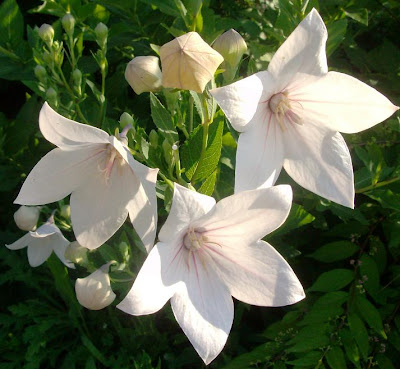
Poppies!!! I've been trying unsuccessfully for years to get poppies to grow here. They must be pretty tasty, because the leaves would come up and quickly be gobbled down to the ground. This time I think I just put so many seeds out there that they couldn't eat them all. The orange ones didn't do much, although they did come up and set seed, so there is still hope for next year. These pink ones are everywhere, and they are lovely. This is just another view of the pink balloon flowers, showing how they open into large soft stars. Maryanne just got some of the deep blue ones. I'll probably be coveting them soon.
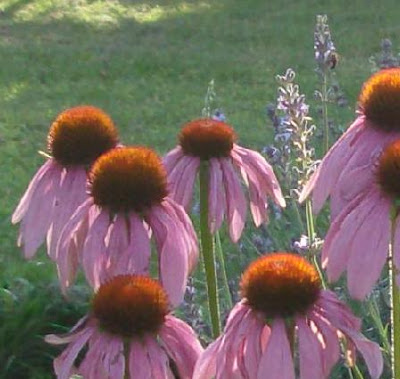
 The sun is starting to go down, and the pink glow hits the top of the exhinacea. I love that time of day, when everything looks so soft and peaceful.
 Out on the back deck at sunset. Here you can see the chamomile, the vitex, the meadow mint, elderberry... and way across the field you can barely make out the pink blossoms on the mimosa tree.
 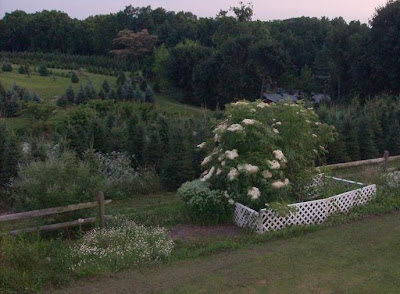 I sit and look out over the fields, and watch the cloud formations overhead. There is nothing between me and the sky; I am so far up here on the hill. Sometimes the house is in the clouds.
 It is a perfect end of a perfect day.
This is just another view of the pink balloon flowers, showing how they open into large soft stars. Maryanne just got some of the deep blue ones. I'll probably be coveting them soon.The sun is starting to go down, and the pink glow hits the top of the exhinacea. I love that time of day, when everything looks so soft and peaceful.Out on the back deck at sunset. Here you can see the chamomile, the vitex, the meadow mint, elderberry... and way across the field you can barely make out the pink blossoms on the mimosa tree.  I sit and look out over the fields, and watch the cloud formations overhead. There is nothing between me and the sky; I am so far up here on the hill. Sometimes the house is in the clouds. It is a perfect end of a perfect day.

 It can be a little overwhelming. When I first started out, more plants were missed than were hit. A few days of rain can throw off everything if you aren’t prepared. So how do you prepare to harvest and utilize a number of different plants each year? I will happily share my method, and you may change and revise it to suit your needs.
  ~ First make a list of the herbs you’d like to find and harvest this year. It helps if you know where they are, or if they are already in your garden, but I always have a few that are always in the “if found” category.
 The recipe is
  I usually use this along with holy basil, and there is some lovely milky oat seed tincture cooking away on the counter, too. The combination has been nothing short of miraculous in my experience. Some also call albizzia "herbal prozac" but I am not fond of giving herbs drug nicknames.


 Chives (I deadheaded the whole plant and am being rewarded with a healthy second bloom) dance among the Roman Chamomile and the Thyme.


 This lady bug is resting on some of the blossoms.
 Just this year I've realized how closely the Scarlet Pimpernel resembles Chickweed, and how closely they often grow together. On the property here, they are often growing intertwined. Will have to do some research on the Pimpernel!!! NOTE: This plant is edible, and is sometimes called "Poorman's Chickweed". I'm still laughing. How poor do you have to be to have a poorman's version of chickweed?
 Beautiful, dainty, and oh! so fragrant, the valerian is still blooming out front. Again, I took all of the blooms earlier for a tincture, so it is re-blooming.
 Thyme flowers growing in the shade of a nearby Vitex bush. I can see why the fairies are so fond of these little darlings!


 The first Echinacea flower of the season. I've never noticed that scissored effect at the tips of the petals before, but adore the rusty red center of the flower - even if it will become prickly as time passes. It will lure the beautiful gold finches (distelfinks or thistle finches in Lancaster County) to eat right outside my bedroom windows in the Autumn. With the windows open, I'll hear them sing.

 This picture is actually to show off my new banner. Vistaprint.com was running a special, and the banner came for the price of (very expensive) shipping. It's pretty cool, and really easy to tape up to a wall. Our other banners are heavy weight, lovely, but too heavy for this kind of action. Oh and check out all my trophies! LOL. Ok. I lied. We were set up at a high school and THEY had a lot of trophies. Pfft...


 First, I processed 6 scapes, about 1/4 cup of walnuts, and 1/4 cup of Parmesan cheese with enough olive oil to work easily.


